
Carbon Monoxide (CO), The Silent Killer
Make sure you are not at Risk
Heating and cooking appliances fuelled by coal, smokeless fuels, wood, oil and gas can cause CO poisoning if they are poorly installed; incorrectly used or if they are not regularly maintained. Poisoning CO gas is produced when fuel does not burn properly.
What are the symptoms
| Mild Exposure. | Medium Exposure. | Extreme Exposure. |
|
|
|
Ventilation
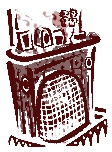 Air is vital:
Heating appliances whatever fuel they burn need to be able to
'breathe'
in order to function efficiently. To
'breathe'
they need a constant and sufficient flow of air, so the room must not be completely air tight.
Air is vital:
Heating appliances whatever fuel they burn need to be able to
'breathe'
in order to function efficiently. To
'breathe'
they need a constant and sufficient flow of air, so the room must not be completely air tight.
If your home has draught-proofing or double glazing fitted you may need vents or air-bricks in an exterior wall of the room. If vents or air-bricks are already there always ensure they are not blocked or covered.
Who are most at risk from CO
Everyone is at risk to the effects of exposure to CO. However, infants, pregnant women, seniors and persons with respiratory ailments are particularly sensitive to CO exposure.
Infants and children are especially vulnerable to CO due to their high metabolic rates.
CO accumulates faster in children's bodies and therefore more rapidly affects the oxygen supply to vital organs.
How can I protect my home from CO
CO cannot be detected without a reliable CO detector. Every home should have at least one CO detector installed.
Where do I install my CO detector
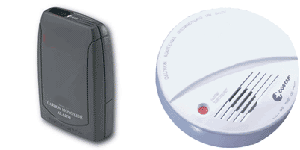 No matter which detector you choose, it's important to know where to install and how to maintain it. Manufacturers recommend that every occupied floor of a house have a detector. But if you opt for only one alarm, install it in the hallway outside the sleeping area.
If it's a plug-in model, don't use an outlet controlled by a wall switch. Keep detectors at least 10 feet distant from a fuel-burning appliance and away from most household chemicals or aerosols.
Detectors should not be located in dead-air spaces-crawl spaces, room corners, peaks of vaulted ceilings, or behind curtains-where CO might not reach. Equally important, detectors should not be in areas of high air turn-over, such as near a ceiling fan or a fresh air vent, which could mask CO build-up. Finally, don't install a detector in an area subject to wide temperature or humidity swings, such as an attic, garage, or bathroom.
Maintenance
Test your CO detector at least once a week. Battery-operated detectors will warn you when power is low, but replace the batteries annually anyway.
This site is best viewed with Internet Explorer 4 or above at 800 x 600
Produced by West Sussex Fire Brigade Web Technology.
©Copyright West Sussex Fire Brigade 2000
West Sussex Fire Brigade Disclaimer
Information Provider
Paul Archer
Last Updated Friday October 5, 2001 4:23 PM
