C ommand and Mobilising Centre (CMC)
|
|
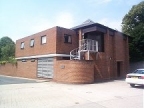
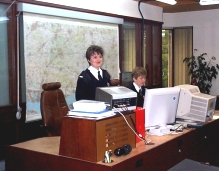
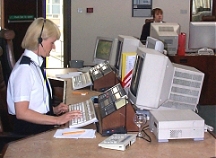
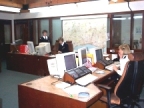
What happens when you dial 999? Any call to the Fire & Rescue Service made through the 999 system in West Sussex will be answered by fire control operators based at the Command and Mobilising Centre (CMC) in Chichester. When you dial 999 the first person you will hear will be the emergency operator, who will ask you which service you require. If you ask for the Fire Service you will then be connected to the Services Command and Mobilising Centre (CMC). The emergency operator will confirm your telephone number and CMC will then ask for details of the emergency, these are:-
REMEMBER , do not panic:- The operators are highly trained and will guide you calmly through the whole process. Using a fully computerised command and control system, which records all calls, operators are able to mobilise the Services resources of vehicles and personnel to fires, rescues and other emergencies. During the emergency, as well as mobilising the appropriate attendance, fire control operators alert other organisations to the incident at an early stage. They also liaise and exchange information with other emergency services, local authorities, public utilities, government agencies and sources of expert and scientific advice to ensure an efficient and co-ordinated approach. Geographical Information System An important improvement to mobilising was made in April 2000 by the introduction of the computerised Geographical Information System, supplied by Imass, that is linked directly to the mobilising system and assists operators in locating addresses. This system also holds a Central Hazard Management System database containing hazard information and Service procedures designed to assist in operational incidents. These are valuable tools, as the mobilising process is dependent on the prompt matching of the emergency's location with the thousands of addresses held on the command and control database. During 1998, a complete review took place of the Command and Mobilising Centre training for probationary personnel. This has resulted in the introduction of core skills training packages and these are proving an excellent method of training and assessing the development of personnel in the first two years of their careers. The number of actions required to be performed by the Command and Mobilising Centre for each call varies according to the nature of the emergency and a major incident would necessitate a considerably greater amount of actions than a minor incident. When a major incident occurs, generating sometimes hundreds of emergency calls, mobilising procedures are adjusted to ensure that call-handling standards are maintained and that, if necessary, calls and response can be prioritized. Call Handling- this involves the efficient receipt of all 999 calls coming from BT, Cable & Wireless, mobile telephones, fire alarm companies and other emergency services and assigning the correct attendance. The number of calls which CMC now receives to an individual incident has increased over the years with the proliferation of mobile telephones. It is now common to receive numerous 999 calls to the same incident and the often vague or contradictory address details given by motorists using mobile telephones to report road traffic accidents present additional challenges for the centre staff.
|
This site is best viewed with Internet Explorer 4 or above at 800 x 600
Produced by West Sussex Fire & Rescue Service.
©Copyright West Sussex Fire & Rescue 2003/4
Information Provider
Paul Archer
Last Updated Monday July 19, 2004 10:22 AM