
Countryside and Farm Fires
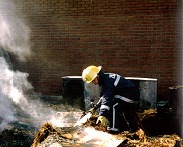 Every year in the UK
1700
farm buildings and
66,000
areas of grassland are destroyed by fire. Fifty percent of these fires are started deliberately, either as an act of mindless vandalism or a fraudulent insurance claim.
Every year in the UK
1700
farm buildings and
66,000
areas of grassland are destroyed by fire. Fifty percent of these fires are started deliberately, either as an act of mindless vandalism or a fraudulent insurance claim.
A serious fire on a farm can affect the financial stability of even the most well run business. Forty percent of businesses that suffer arson attacks never trade successfully again.
Farms are particularly vulnerable to arson, their isolated location, open boundaries, readily ignitable hay and straw make them an easy target.
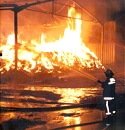 Whilst arson attacks on farms and small holdings may be difficult to eliminate, a number of simple precautions can substantially reduce the risk of attack.
A lighted cigarette butt thrown from a passing vehicle can mean the loss of whole fields of standing crops whilst glass bottles left lying around can in grass or woodlands cause fires of huge proportions.
Hay and straw should be removed from fields as soon as possible after harvesting.
Hay and straw should be stored:-
1. Separate from other buildings, particularly those housing fuels, agrochemicals and machinery.
2. In stacks of reasonable size, spaced at least 10 metres apart.
3. Separate from livestock housing.
4. Petrol, diesel and other fuels should be stored in secure areas; storage tank outlets should be padlocked.
5. Fertilisers and pesticides should be kept under lock and key.
6. Refuse should be disposed of safely and on a regular basis.
Assessing The Risk
A simple quick survey around the farm will identify areas where an arsonist could strike, ask the local crime prevention officer/your insurance adviser for their assistance.
Provide, repair or replace damaged fencing or gates
Install intruder sensors and security lighting
Maintain the security of outbuildings
Replace or re-site security and warning notices.
Maintain firefighting equipment and check that it is in good order.
Dogs and geese can give effective early warning of intruders, however guard dogs must not be allowed to roam freely.
Prepare a fire routine and action plan, make sure all farm workers know what to do.
Preventing fires in grassland and standing crops
The danger of fire during hot weather is self evident, however, many fires occur in the spring and late summer, usually due to carelessness.
Don't allow the lighting of open fires or barbecues .
Ensure cigarettes etc, are extinguished carefully
Only allow camping and picnicking in monitored areas.
Provide litter receptacles for bottles and other rubbish- empty them regularly.
Ask parents to supervise their children.
Regularly check and maintain open water supplies for firefighting.
Ensure 'Fire Danger' warning signs are in place.
Remember- Report all incidents of fire and anyone acting suspiciously to your local police.
If fire breaks out
Call the Fire Brigade without delay
Only attempt to fight the fire if it is safe to do so.
Send someone to the farm entrance to direct the fire brigade to the fire.
Prepare to evacuate livestock should the fire spread.
Prepare to use farm machinery to assist the fire brigade.
If you have any information about a suspicious fire call
Crimestoppers Arson Alert

This site is best viewed with Internet Explorer 4 or above at 800 x 600
Produced by West Sussex Fire Brigade Web Technology.
©Copyright West Sussex Fire Brigade 2000
West Sussex Fire Brigade Disclaimer
Information Provider
Paul Archer
Last Updated Saturday August 18, 2001 5:47 PM
