
CARAVANS & MOBILE HOMES
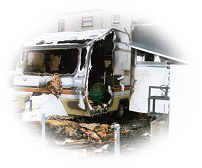
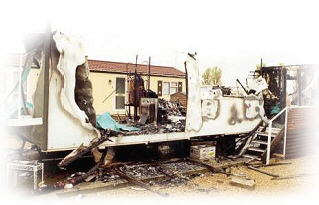 If a fire breaks out in a caravan or mobile home it is always serious. A fire frequently spreads rapidly in the confined space, fed by the many flammable materials that are part of the structure and its contents.
Tragically, on too many occasions, it also claims lives. However, the truth is that these types of home, whether used for holidays or permanent living accommodation, can be as safe as any other property, provided the right fire safety measures are taken by those who use them.
Licensing Authorities, in co-operation with the Fire Brigade. can do much to ensure that all types of sites are properly laid out and managed with fire safety in mind, national and local caravan clubs and agencies do likewise.
 But, in the end, fire safety in a caravan or mobile home comes down to the attitudes and actions of the people using them.
This page sets out a whole range of fire safety measures connected with these homes. Please read it carefully and make certain thal all those who use your caravan or mobile home get the rnessage as well.
Fire safety is recognising the risks and planning to eliminate them and, if an emergency does arise, knowing what to do quickly and safely to prevent loss of life, injury or destruction of property.
Fire Safety sense is common sense, So your action today may save a life tomorrow
BE PREPARED
1. Find out what the firefighting arrangements on the camp site are
2. Make sure there is either a water or dry powder extinguisher located inside the caravan near the door
3. Keep a torch handy for emergencies, don't use candles
Keep everything tidy and in its place. Make sure your route out is clear at all times
BOTTLED GAS
Keep cylinders outside the caravan
Before going to bed or leaving the caravan for some time, turn off all appliances
The cylinder should also be turned off unless an appliance such as a refrigerator is designed for continuous running
Never use a cooker or heater whilst travelling
When changing cylinders
-b efore disconnecting an empty cylinder turn off the valve
-reconnect the full cylinder before turning on the valveIf you suspect a leak - Use soapy water and watch for bubbles - N EV ER use a naked flame - turn off all appliances - ventilate by opening doors and windows - do not smoke
Fixed appliances should be connected by fixed metal pipework and the flexible piping used to connect the cylinder must only be tubing especially designed for use with botted gas.
Some caravans have speciai ventilated inside compartments to house cylinders. Extreme care is required as gas cylinders may explode in a fire.
SOLID FUEL STOVES
Use smokeless fuels instead of coal and other fuels which burn with a long flame
Make sure there is a strong metal ashpan which can be removed without spilling ashes onto the caravan floor.
Do not rapidly draw up the fire as this will overheat the flue pipe and may cause a fire
Have the flue pipe swept regularly
Keep clothing clear ot the flue pipe
GAS HEATERS
These should preferably be of the catalytic type with adequate guards to prevent combustible materials touching them
VENTILATION
Adequate ventilation is often overlooked. Oil and gas appliances burn up oxygen and in some cases carbon monoxide can be produced in lethal quantities
Don't block up air vents to keep out the cold or draughts - it could prove fatal
ELECTRICAL EQUIPMENT
Don't use portable heaters
If possible switch off and unplug appliances before going to bed or if leaving the caravan for some time
Do not use trailing flexes or route them under carpets
Keep light bulbs away f rom combustible material and ensure electrical wiring is regularly maintained and appliances are in good order.
Where mains supply is connected to a caravan there may be the added hazard of electric shock particularly if the caravan has a metal construction
Don't use multi-way plug adaptors
Use correctly rated fuses
NEVER run appliances off of a light socket
Shuttered sockets protect from prying fingers
PORTABLE EOUIPMENT
For maximum safety all equipment must be fixed. The use of portable appliances - heaters, cookers or lighting - is therefore not recommended and should be avoided · Remember, portable appliances are liable to be knocked over as space is limited and they may fall over if a caravan rocks in high wind.
OTHER HAZARDS
1. Take care when cooking. Don't leave fat pans unattended.
2. Keep matches and lighters away from young children.
3. If you smoke use metal ashtrays and don't smoke in bed.
4. Do not leave children alone in a caravan.
MAKE SURE YOUR CARAVAN IS FITTED WITH A
SMOKE ALARM
Back to top of page
This site is best viewed with Internet Explorer 4 or above at 800 x 600
Produced by West Sussex Fire Brigade Web Technology.
©Copyright West Sussex Fire Brigade 2000
West Sussex Fire Brigade Disclaimer
Information Provider
Paul Archer
Last Updated Friday October 5, 2001 3:39 PM
